Orders placed before 4 p.m. are processed on the same day.
 Zapłać 60 dni później z PRAGMA GO
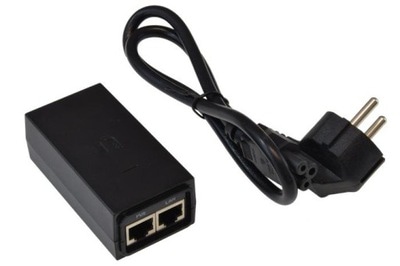
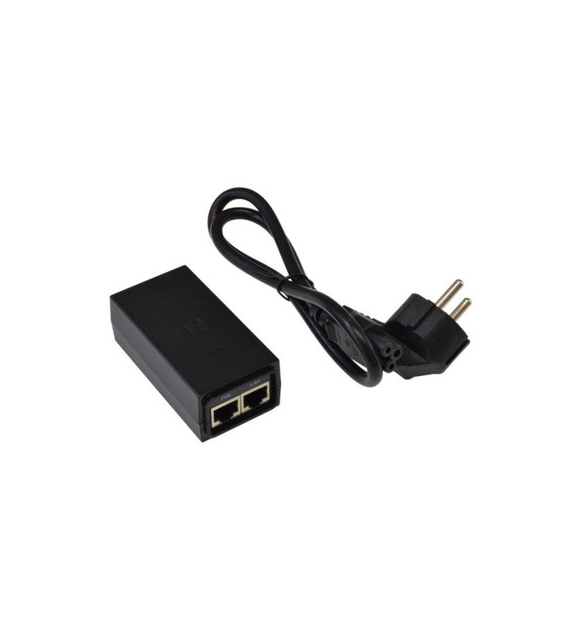
Ubiquiti POE-50-60W is a PoE power supply designed to deliver power to network devices via an Ethernet cable. It is equipped with two shielded RJ45 Gigabit Ethernet ports – a LAN input for connecting to the network and a PoE output for powering the device.
The power supply provides an output voltage of 50 V DC and supports passive PoE over all four wire pairs. Its robust construction and high energy efficiency make the POE-50-60W a suitable power source for Ubiquiti network devices. It can also be connected to the Ubiquiti TOUGHCable grounding system to increase installation protection against electrostatic discharges.
Passive PoE power supply via Ethernet
Output voltage: 50 V DC
Rated power: 60 W
Output current: 1.2 A
Two shielded RJ45 Gigabit Ethernet ports
Power delivery over four wire pairs
Energy efficiency above 85%
Compatible with the Ubiquiti TOUGHCable grounding system
Compact housing
Powering network devices that support passive 50 V PoE
Gigabit Ethernet installations
Network infrastructure based on Ubiquiti devices
Powering devices without the need for a separate power cable
Manufacturer: Ubiquiti
Model: POE-50-60W
Type: passive PoE power supply
Output power: 60 W
Output voltage: 50 V DC
Output current: 1.2 A
Network interface: 2 × RJ45 Gigabit Ethernet
LAN port: Gigabit Ethernet
PoE port: RJ45, shielded
Power pins:
1, 2, 4, 5 – positive (+)
3, 6, 7, 8 – negative (-)
Input voltage: 90–260 V AC
Input frequency: 47–63 Hz
Input current:
1.3 A at 120 V AC
0.75 A at 230 V AC
Inrush current:
100 A at 120 V AC
200 A at 230 V AC
Efficiency: above 85%
Switching frequency: 65 kHz
Line regulation: ±1%
Load regulation: ±3%
AC power connector: IEC-320 C6
Dimensions: 101 × 60 × 33 mm
Weight: 192 g
Activity LED: none
Remote reset capability: no
Reset button: none
Operating temperature: 0°C to 40°C
Storage temperature: -30°C to 70°C
Permissible humidity: 35–95%, non-condensing
Standards compliance: IEC 60950-1:2005+A1, UL60950-1, EN55022:2010, EN55024:2010, FCC Class B
We have made every effort to ensure that the above data is correct, but we do not guarantee that the published information does not contain errors, which, however, cannot constitute the basis for any claims.









 Szybki proces.