Orders placed before 4 p.m. are processed on the same day.
 Zapłać 60 dni później z PRAGMA GO
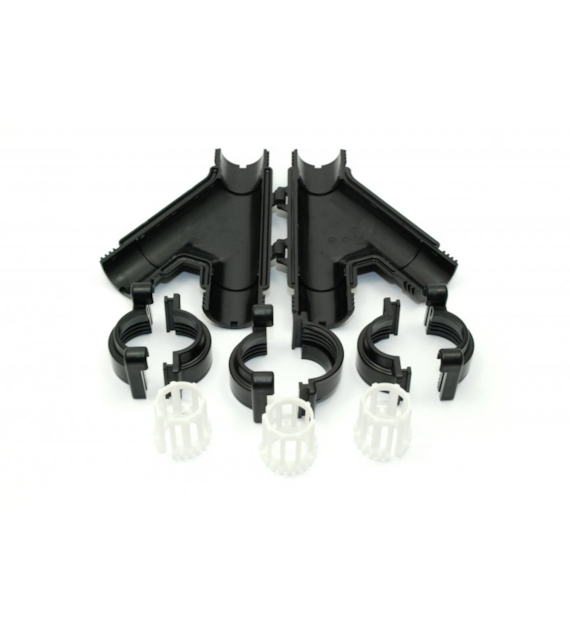
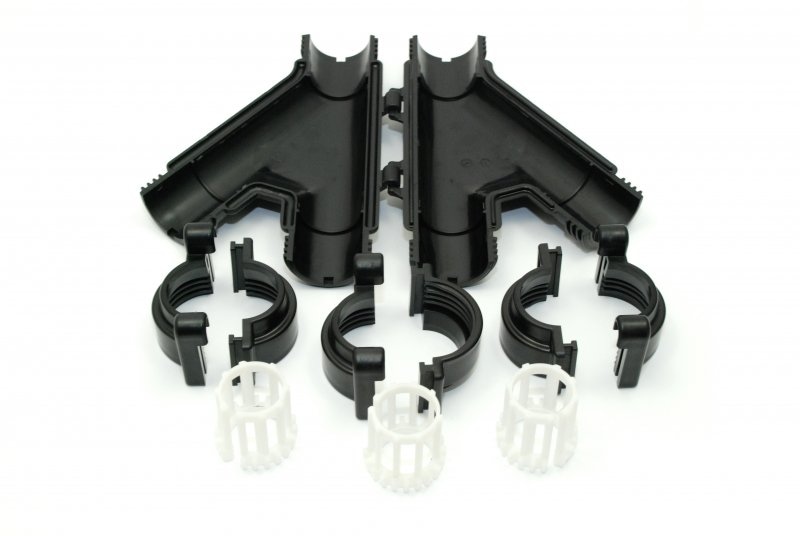
The branch tee for HDPE/RHDPE pipes with a diameter of 40 mm is an openable connector designed to create branches in telecommunications installations at a 45° angle. The two-piece compression nuts enable quick installation without the need to cut pipes, disconnect the installation or pull existing fiber optic cables through again.
The 45° branch angle facilitates cable routing and helps maintain the appropriate bending radius. The tee can also be used to connect microducts routed in bundles and multiducts. It is resistant to UV radiation and both low and high temperatures, making it suitable for above-ground and underground installations as well as telecommunications duct systems.
Designed for HDPE/RHDPE pipes with an outer diameter of 40 mm
45° branch angle
Openable design for easy installation
Two-piece compression nuts
Tool-free installation
Installation without cutting pipes or pulling cables through again
Helps maintain the appropriate cable bending radius
Can be used to connect microducts in bundles and multiducts
Resistant to UV radiation and temperature variations
Suitable for above-ground, underground and duct installations
Branching HDPE and RHDPE pipes in fiber optic networks
Construction and expansion of telecommunications duct systems
Creating branches in cable installations
Connecting microducts routed in bundles and multiducts
Fiber optic and telecommunications installations
Product type: branch tee
Designed for: HDPE/RHDPE pipes
Pipe outer diameter: 40 mm
Branch angle: 45°
Design: openable
Nut type: two-piece compression nuts
Material: PP (polypropylene)
Color: black
Weight: approximately 0.3 kg

|
Rura wsporcza do studni SKR-1
SKR-1-RURA-WSPORCZA
0000000652
|

|
Nabój z CO2 do rękawów TDUX (1sztuka)
E7512-0160
5904858988761
|

|
SOPPEC Farba geodezyjna do znakowania w sprayu - Czerwony
SOPPEC-1412130-RED
3598300014294
|

|
Taśma ostrzegawcza 500metrów (napis Uwaga Kabel Światłowodowy)
FWT-500M
5904858985005
|
We have made every effort to ensure that the above data is correct, but we do not guarantee that the published information does not contain errors, which, however, cannot constitute the basis for any claims.









 Szybki proces.


