Orders placed before 4 p.m. are processed on the same day.
 Zapłać 60 dni później z PRAGMA GO
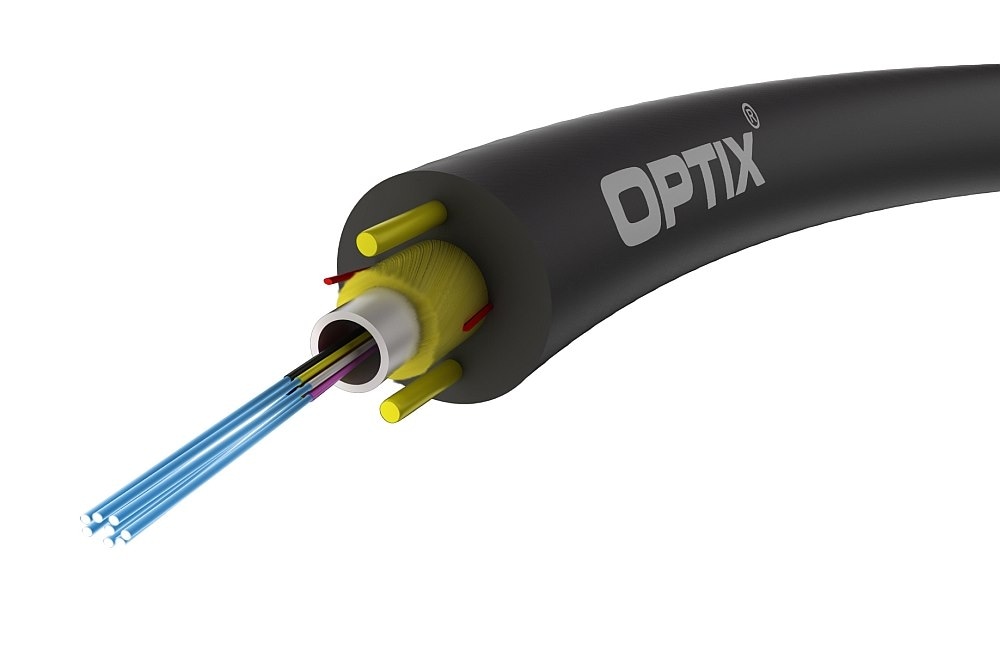
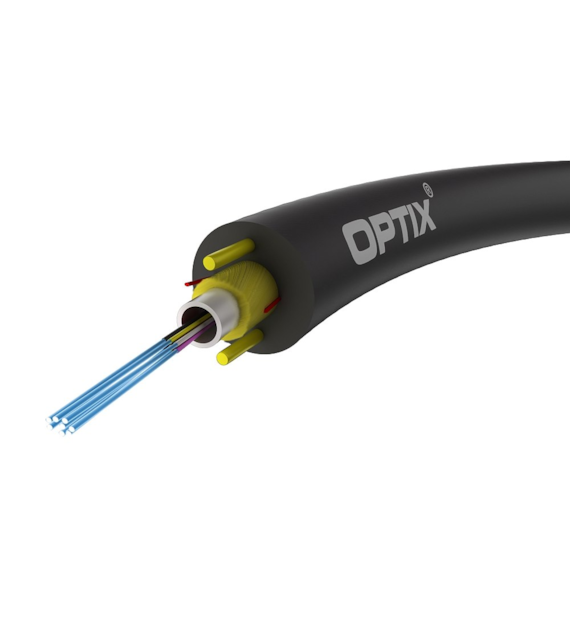
The OPTIX Aramid Z-XOTKtcdD 2F fiber optic cable is designed for building telecommunications networks in telecommunications ducts and overhead installations with spans of up to 80 m. Its single-tube construction and small diameter ensure low weight, flexibility and convenient installation by blowing or pulling.
The cable contains 2 single-mode G.652D optical fibers protected by hydrophobic gel. Reinforcement with aramid fibers and two ARP or FRP rods increases the structure's resistance to installation tensile loads. The outer HDPE sheath protects the cable against UV radiation and environmental conditions.
Number of fibers: 2F
Single-mode fibers compliant with ITU-T G.652D
Single-tube construction with hydrophobic gel
Reinforcement with aramid fibers and two ARP/FRP rods
UV-resistant HDPE outer sheath
Fully dielectric construction
Installation by blowing or pulling
Suitable for telecommunications ducts and overhead installations
Maximum installation tensile load: 1200 N
Maximum overhead span length: 80 m
Cable type: Aramid Z-XOTKtcdD
Number of fibers: 2
Fiber type: single-mode G.652D
Construction: single-tube
Tube filling: hydrophobic gel
Reinforcing element: aramid fibers
Additional reinforcement: 2 ARP rods with a diameter of 0.5 mm or FRP rods with a diameter of 0.4 mm
Outer sheath: black HDPE, UV-resistant
Cable diameter: approximately 5.3 mm
Cable weight: approximately 22 kg/km
Maximum installation tensile load: 1200 N
Maximum operating tensile load: 600 N
Installation temperature range: -10°C to +50°C
Operating temperature range: -40°C to +70°C
Minimum bending radius during installation: 20 × cable diameter
Minimum bending radius during operation: 10 × cable diameter
Maximum overhead span length: 80 m
Primary and secondary telecommunications ducts
Fiber optic installations using the blowing method
Installations using mechanical cable pulling
Overhead fiber optic networks with spans of up to 80 m
We have made every effort to ensure that the above data is correct, but we do not guarantee that the published information does not contain errors, which, however, cannot constitute the basis for any claims.









 Szybki proces.