Orders placed before 4 p.m. are processed on the same day.
 Zapłać 60 dni później z PRAGMA GO
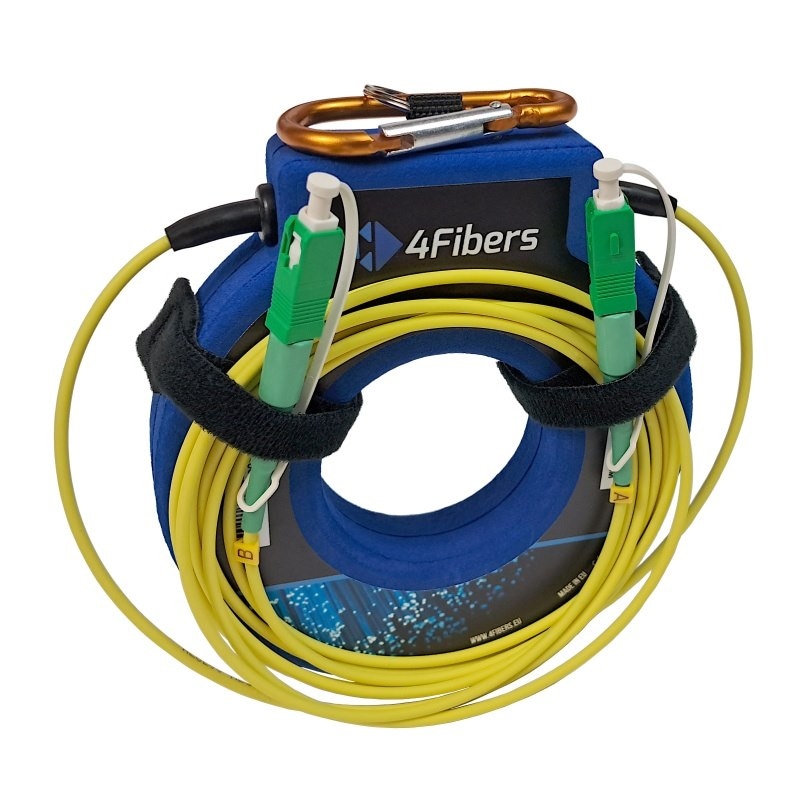
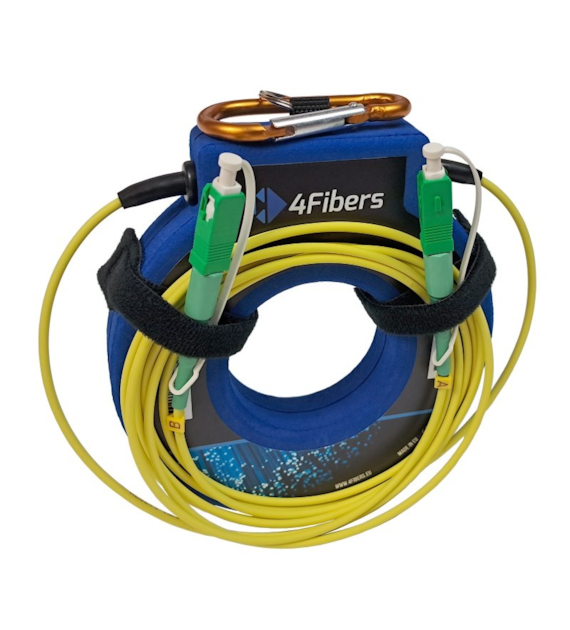
The OTDR Launch Cable by 4Fibers is a professional single-mode measurement tool, essential for specialists involved in diagnosing fiber optic networks using an OTDR (Optical Time Domain Reflectometer). Its primary purpose is to eliminate the dead zone of the device, ensuring accurate measurement of the first connector in the tested link.
The product was designed by specialists in reflectometry testing, resulting in an exceptionally durable and precise tool suitable for use in all field conditions.
The connector parameters of test cables have a direct impact on measurement results. This launch cable delivers excellent performance thanks to the use of PREMIUM connectors:
Optical fiber: Corning 28e+ G.652.D (Singlemode - SM, 9/125)
Connector insertion loss: Typically <0.15 dB, maximum 0.2 dB
Connector reflectance (return loss): UPC <-50 dB, APC <-62 dB
Connectors: SC/UPC-SC/UPC (other configurations are also available on request).
Fiber configuration: 4 Fibers (4 optical fibers).
Length: Available in various lengths, e.g. 150 m for the specified product code.
Manufacturing: Entirely manufactured in the EU (Poland) in accordance with the highest quality standards.
The test cable features a reinforced design to ensure long service life and reliability:
Housing: Made of high-density foam, which is both flexible and protects the cable coil.
Reinforced leads: Cable sections extending from the housing are reinforced with steel tape and covered with an additional LSOH (Low Smoke Zero Halogen) layer, providing exceptional flexibility and resistance to mechanical damage.
Connector protection: The cable-to-connector joints are reinforced with heat-shrink tubing, while the ferrules themselves are protected with dust caps.
Mobility and mounting:
Carabiner for convenient hanging during operation.
Magnetic surface for quick and easy attachment of the launch cable to metal surfaces.
Weight and dimensions: Exceptionally lightweight design.
This launch cable is a professional, reliable and ergonomic accessory that improves the quality and precision of OTDR reflectometry measurements.
We have made every effort to ensure that the above data is correct, but we do not guarantee that the published information does not contain errors, which, however, cannot constitute the basis for any claims.









 Szybki proces.